

LiDAR Navigation
LiDAR is a navigation system that enables robots to comprehend their surroundings in a fascinating way. It combines laser scanning technology with an Inertial Measurement Unit (IMU) and Global Navigation Satellite System (GNSS) receiver to provide accurate and detailed maps.
It's like an eye on the road, alerting the driver to possible collisions. It also gives the car the ability to react quickly.
How LiDAR Works
LiDAR (Light-Detection and Range) uses laser beams that are safe for the eyes to look around in 3D. Onboard computers use this data to navigate the robot and ensure the safety and accuracy.
Like its radio wave counterparts sonar and radar, LiDAR measures distance by emitting laser pulses that reflect off objects. These laser pulses are recorded by sensors and used to create a real-time 3D representation of the environment known as a point cloud. The superior sensing capabilities of LiDAR as compared to other technologies are based on its laser precision. This results in precise 3D and 2D representations of the surroundings.
ToF LiDAR sensors determine the distance from an object by emitting laser pulses and determining the time required for the reflected signals to reach the sensor. The sensor can determine the range of a surveyed area from these measurements.
This process is repeated several times per second, creating a dense map in which each pixel represents a observable point. The resultant point cloud is often used to calculate the height of objects above ground.
The first return of the laser's pulse, for instance, may be the top surface of a tree or a building, while the last return of the pulse represents the ground. The number of return depends on the number reflective surfaces that a laser pulse will encounter.
LiDAR can also identify the type of object by the shape and color of its reflection. For instance green returns could be a sign of vegetation, while a blue return could be a sign of water. Additionally, a red return can be used to estimate the presence of an animal in the vicinity.
A model of the landscape can be constructed using LiDAR data. The most widely used model is a topographic map, which shows the heights of features in the terrain. These models can be used for many purposes including flood mapping, road engineering, inundation modeling, hydrodynamic modelling and coastal vulnerability assessment.
LiDAR is a very important sensor for Autonomous Guided Vehicles. It gives real-time information about the surrounding environment. This allows AGVs to safely and effectively navigate in challenging environments without the need for human intervention.
LiDAR Sensors
LiDAR is comprised of sensors that emit and detect laser pulses, photodetectors that convert these pulses into digital data, and computer processing algorithms. These algorithms transform the data into three-dimensional images of geospatial objects such as building models, contours, and digital elevation models (DEM).
The system measures the amount of time it takes for the pulse to travel from the target and return. The system is also able to determine the speed of an object by measuring Doppler effects or the change in light velocity over time.
The number of laser pulses that the sensor gathers and the way their intensity is characterized determines the resolution of the sensor's output. A higher scanning density can result in more detailed output, while the lower density of scanning can produce more general results.
In addition to the sensor, other key components of an airborne LiDAR system are a GPS receiver that can identify the X, Y and Z locations of the LiDAR unit in three-dimensional space. Also, there is an Inertial Measurement Unit (IMU) that tracks the device's tilt like its roll, pitch and yaw. IMU data can be used to determine atmospheric conditions and to provide geographic coordinates.
There are two kinds of LiDAR scanners: solid-state and mechanical. Solid-state LiDAR, which includes technologies like Micro-Electro-Mechanical Systems and Optical Phase Arrays, operates without any moving parts. Mechanical LiDAR can attain higher resolutions using technologies such as mirrors and lenses but it also requires regular maintenance.
Based on the application they are used for The LiDAR scanners have different scanning characteristics. For example high-resolution LiDAR has the ability to identify objects as well as their shapes and surface textures, while low-resolution LiDAR is predominantly used to detect obstacles.
The sensitivity of a sensor can also affect how fast it can scan an area and determine the surface reflectivity. This is crucial in identifying surfaces and separating them into categories. LiDAR sensitivities are often linked to its wavelength, which can be chosen for eye safety or to prevent atmospheric spectral characteristics.
LiDAR Range
The LiDAR range refers to the maximum distance at which the laser pulse can be detected by objects. The range is determined by both the sensitiveness of the sensor's photodetector and the strength of optical signals returned as a function target distance. Most sensors are designed to ignore weak signals to avoid triggering false alarms.
The simplest method of determining the distance between the LiDAR sensor with an object is to observe the time gap between when the laser pulse is released and when it reaches the object's surface. You can do this by using a sensor-connected clock, or by observing the duration of the pulse using an instrument called a photodetector. The resultant data is recorded as an array of discrete values, referred to as a point cloud, which can be used for measuring as well as analysis and navigation purposes.
By changing the optics, and using a different beam, you can expand the range of a LiDAR scanner. Optics can be changed to change the direction and resolution of the laser beam that is spotted. There are a myriad of factors to consider when selecting the right optics for an application such as power consumption and the capability to function in a variety of environmental conditions.
While it may be tempting to advertise an ever-increasing LiDAR's range, it's important to keep in mind that there are tradeoffs to be made when it comes to achieving a broad range of perception and other system features like frame rate, angular resolution and latency, and object recognition capabilities. To double the detection range the LiDAR has to increase its angular-resolution. This can increase the raw data as well as computational bandwidth of the sensor.
A LiDAR with a weather-resistant head can measure detailed canopy height models in bad weather conditions. This information, combined with other sensor data, can be used to recognize road border reflectors, making driving safer and more efficient.
LiDAR can provide information about many different objects and surfaces, such as roads, borders, and the vegetation. Foresters, for instance, can use LiDAR effectively map miles of dense forest- a task that was labor-intensive before and was difficult without. This technology is helping revolutionize industries such as furniture paper, syrup and paper.
LiDAR Trajectory
A basic LiDAR comprises a laser distance finder reflected by the mirror's rotating. The mirror scans the scene in a single or two dimensions and record distance measurements at intervals of a specified angle. The detector's photodiodes digitize the return signal and filter it to only extract the information needed. The result is a digital cloud of points which can be processed by an algorithm to calculate platform location.
For example, the trajectory of a drone gliding over a hilly terrain calculated using LiDAR point clouds as the robot travels through them. The trajectory data can then be used to steer an autonomous vehicle.
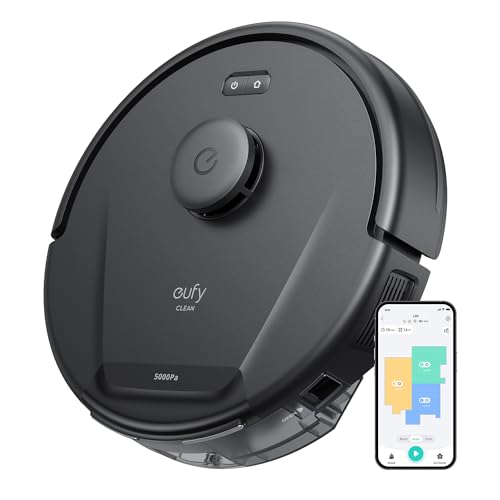
For lidar robot vacuum and mop , the routes generated by this kind of system are very precise. They have low error rates even in the presence of obstructions. The accuracy of a route is affected by a variety of factors, such as the sensitivity and tracking capabilities of the LiDAR sensor.
The speed at which the INS and lidar output their respective solutions is a significant factor, as it influences the number of points that can be matched and the number of times the platform needs to move itself. The speed of the INS also affects the stability of the system.
The SLFP algorithm, which matches features in the point cloud of the lidar to the DEM determined by the drone, produces a better estimation of the trajectory. This is particularly applicable when the drone is operating in undulating terrain with large roll and pitch angles. This is a major improvement over traditional lidar/INS integrated navigation methods which use SIFT-based matchmaking.
Another enhancement focuses on the generation of a new trajectory for the sensor. Instead of using a set of waypoints to determine the commands for control this method creates a trajectories for every new pose that the LiDAR sensor will encounter. The trajectories that are generated are more stable and can be used to guide autonomous systems over rough terrain or in unstructured areas. The underlying trajectory model uses neural attention fields to encode RGB images into a neural representation of the surrounding. This method isn't dependent on ground-truth data to train as the Transfuser method requires.